Henrik Meier · 21 September 2026
Tovara's Abandoned Warehouses Become Canvas for Emerging Local Talent
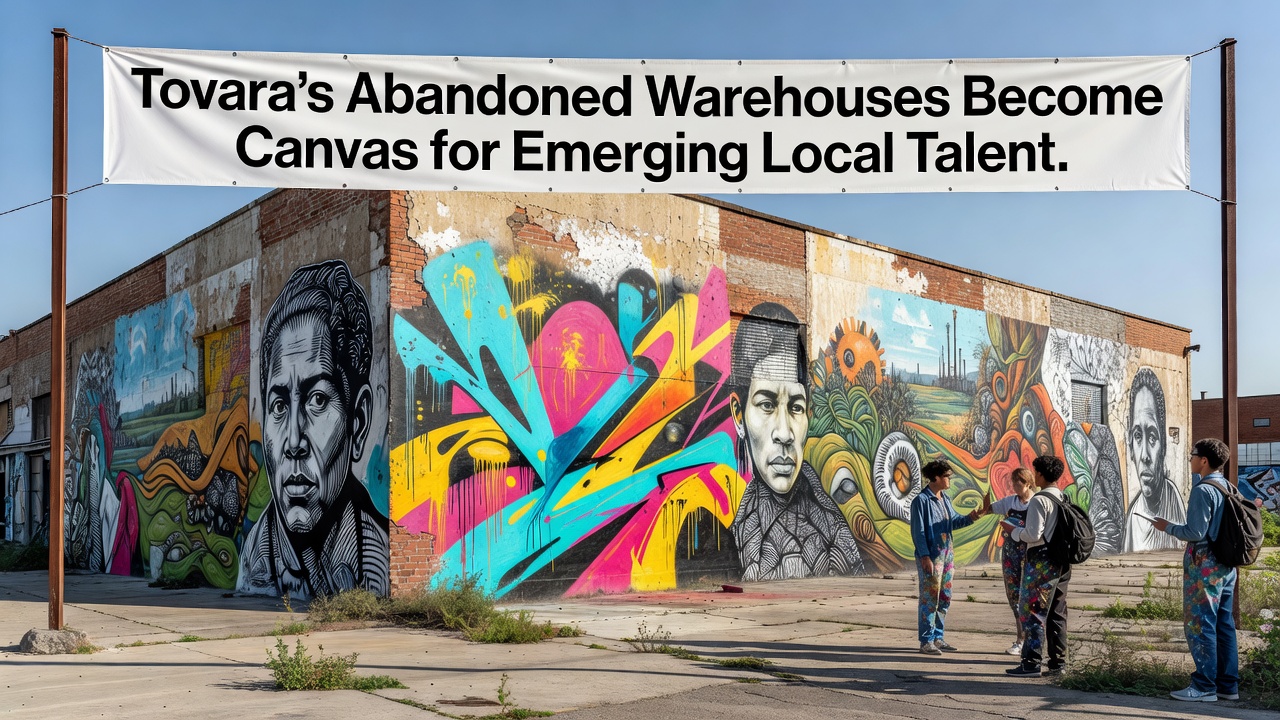
Abandoned warehouses across Tovara have drawn attention as sites where emerging local artists apply paint and mixed media to large interior and exterior surfaces, and city records indicate that more than twenty such buildings received permits for artistic use between 2024 and 2025. The shift began when property owners partnered with municipal cultural offices to allow temporary installations rather than leaving structures vacant, and data from the Tovara Urban Development Office shows a 35 percent increase in approved art projects during that period.
Origins of the Initiative
Local planning documents trace the first coordinated effort to a 2023 pilot that converted a single riverside warehouse into a rotating exhibition space, and subsequent evaluations by the same office found that visitor foot traffic rose steadily without requiring permanent structural changes. Artists gained access through short-term agreements that specify surface preparation, material safety standards, and removal timelines, while owners retained rights to resume commercial use once leases end.
Artists and Techniques in Focus
Participants range from recent graduates of regional art schools to self-taught painters who previously worked in smaller studio collectives, and many employ aerosol techniques alongside traditional brushes to cover walls measuring up to twelve meters in height. One documented project completed in early 2025 used layered acrylics and reflective tape to create an optical illusion visible only under specific lighting conditions, and photographs of the work circulated through regional art networks for several months afterward.
Materials must meet fire-retardant requirements set by the local building authority, and artists submit safety data sheets before beginning work, which has reduced incidents during installation phases according to inspection logs. Some creators incorporate salvaged industrial elements such as conveyor belts or metal piping directly into the compositions, and this approach reuses on-site debris that would otherwise require separate disposal.
September 2026 Programming
Organizers have scheduled an open-studio weekend for September 12 and 13 2026 across five participating warehouses, and the event will feature guided tours, live demonstrations, and a printed map distributed through the Tovara Tourist Information Center. Advance registration opened in July 2026, and preliminary counts indicate over 800 visitors have already signed up for timed slots, matching attendance patterns observed during the 2025 edition.
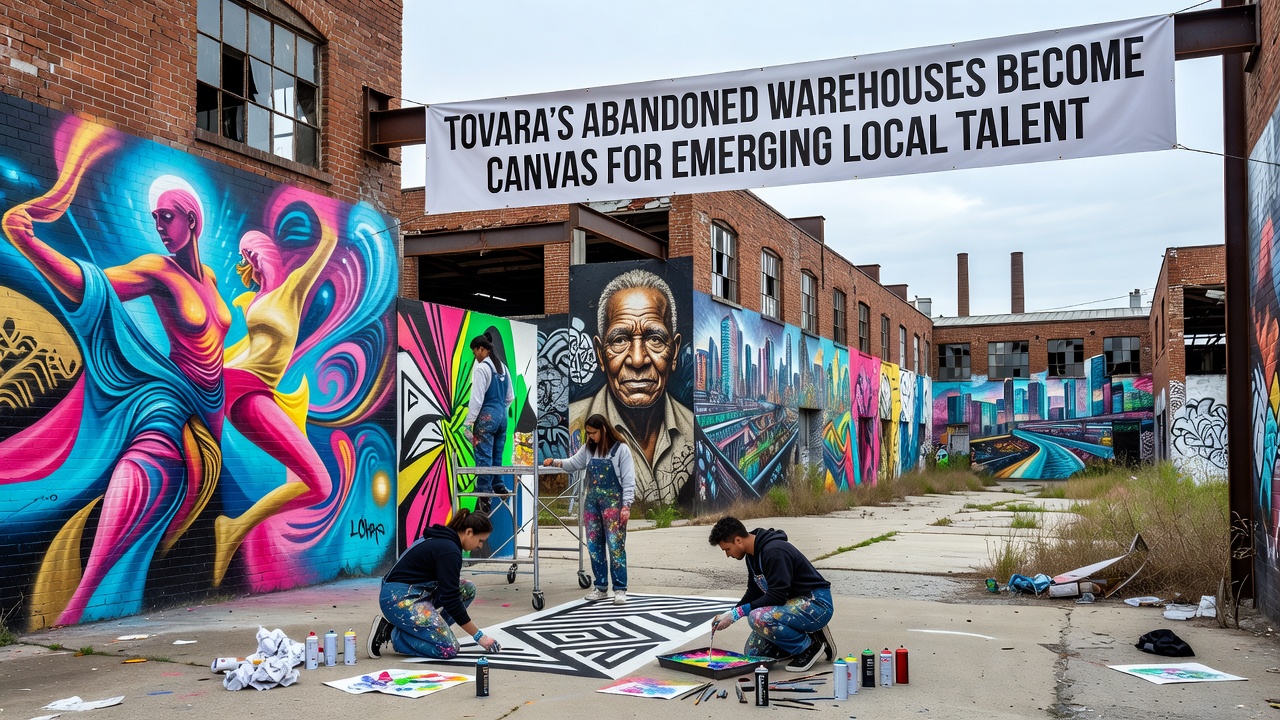
Workshops scheduled alongside the main weekend will focus on color mixing for large-scale surfaces and documentation methods for ephemeral pieces, and participating instructors come from both the local academy and an invited instructor affiliated with the Australia Council for the Arts. The program also includes a panel discussion on temporary public art agreements, drawing on case studies compiled by the European Cultural Foundation.
Community and Economic Observations
Neighborhood associations near the converted warehouses report that evening foot traffic has increased on streets that previously saw minimal activity after dark, and local businesses have noted higher sales on weekends when installations are open to the public. A 2025 survey conducted by the Tovara Chamber of Commerce recorded that 62 percent of nearby retailers observed at least a modest uptick in customers during exhibition periods, although the report stops short of attributing causality.
Transportation authorities added two temporary bus stops adjacent to the largest cluster of sites for the September 2026 weekend, and route maps distributed by the agency list the stops alongside existing cultural venues. Artists receive modest stipends funded through a combination of private sponsorships and small grants administered by the municipal cultural department, and allocation criteria prioritize residents who have not previously received city support for similar projects.
Documentation and Archival Efforts
Photographers commissioned by the cultural office capture each installation before removal deadlines, and the resulting archive is stored in the city library's digital collection with metadata that includes artist names, completion dates, and material lists. Researchers from a nearby university have begun analyzing color degradation patterns on exposed exterior walls, and preliminary findings presented at a regional conference in 2025 suggest that certain pigment combinations hold up longer under local weather conditions than others.
Legal frameworks require that any permanent structural alterations receive separate review, yet most projects remain within the scope of temporary surface treatments that leave original building fabric intact. This distinction has allowed property owners to maintain eligibility for standard commercial insurance policies without additional riders, according to documents filed with the regional insurance oversight body.
Conclusion
The pattern of warehouse-to-canvas conversions continues to expand as more owners review the documented outcomes from earlier sites, and city planners have incorporated lessons from the 2023 pilot into updated permitting guidelines released in spring 2026. The September 2026 programming represents one scheduled checkpoint in an ongoing sequence of events rather than a final endpoint, and records show that additional buildings remain under consideration for future cycles.